How to Field Dress a Deer
Steps:
- Field dress within an hour
- Lay on back with head up hill
- Have a short no slip knife
- Cut skin but not stomach muscle from neck to anus
- Cut muscle of stomach, don’t cut organs
- If nursing doe, remove mammary glands
- If buck remove penis and testicles
- Crack rib cage
- Free the diaphragm
- Remove esophagus
- Once intestines are removed place in bucket or pail
- Move to
a safe dump site to avoid contamination
- Wash hands and equipment and if necessary, soak
equipment in bleach
Introduction:
I am an avid outdoors
man and as such I love to hunt. I think that one of the most important things
that you need to know as a hunter is how to field dress a deer. Above I have
laid out the steps for field dressing. However, below I have included a longer
a more thorough guide to field dressing a deer properly.
Field dressing: image 1
The first thing
you will need to keep in mind is time. Field dressing should take
place within one hour of the kill. Lay the deer on its back on a
slight incline and, if possible with its head pointed up hill. A
small creek or other water source will make clean up a bit
easier. Remember to wear rubber gloves to protect your arms and
hands from pathogens. You will need a short nonslip handled knife,
this is important because longer knives can turn when they become slick with
blood or intestinal material. If a knife does this you put yourself at risk for
cutting yourself and introducing any diseases that the deer might contain into to your own bloodstream.
Cutting and removing
organs: image 2
Start by making a small
incision on the stomach just deep enough to puncture the skin without slicing
the stomach muscle and work this cut from the neck to the anus. Making this
long cut will help with the rest of the process because it will expose all organs
when you need to remove them. Next make a cut on the muscle of the
stomach. Be extra careful not to puncture an organ with your blade,
depending on which organ you slice through, you could ruin the meat of your kill
and have nothing to show for your efforts. If you nick the stomach
with your knife the stomach acid and bacteria of the stomach will render your
meat non-edible. Work this cut to the parameters of the previous
cut. If you’ve shot a nursing doe, you’ll need to remove the mammary
glands and if you’ve shot a buck you’ll need to remove the penis. Next work
your way to the head separating the rib cages by using a prying motion with
your blade. Again, be careful during this step to avoid cutting
yourself. Once the chest cavity is open cut the diaphragm
free. The diaphragm is a thin flat but tough muscle which separates
the heart and lung area from the stomach area. Remove this on both
sides of the chest. After this you will cut the esophagus
out. Use one hand to grasp it firmly while the other uses the blade
to cut it loose. With this chore done the organs should pull out in
one continuous pull. You can use a hatchet or bone saw to open up
the pelvis and remove any leftover parts, but this process can be saved for
later or skipped altogether if you plan on quartering the deer immediately.
Disposal: image 3
Remember that you
will need a bucket or trash can on hand to place removed parts into to avoid
contamination. Contamination can include but isn’t limited to bacterial
contamination. Contamination can also lead to the fact that leaving animal skin
and organs can increase the predators in an area and ruin the ecosystem and environment
that you hunt in. The increase in predators can lead to prey animals being
driven out of an area and the hunting spot being deemed worthless for
generations. There is also a chance that your kill had an infection that could
be passed on to animals that consume the organs and left over bits from
cleaning. You should always wash your hands and any tools or
equipment used in this process in hot soapy water and if tools have small nicks,
grooves, or even embossing it may be necessary to rinse them in a bleach
solution. This makes sure that no cross contamination occurs between kills. Cross
contamination can cause pathogens to be transferred from the last kill to the
next and can cause sickness in humans and animals alike.
Conclusion:
By knowing how to properly field dress a deer, you can save
yourself from the risk of food born illnesses. After you have followed all of
the steps the deer needs to be put on ice and taken to the processor as quickly
as possible. The steps that I have told you are how I field dress my deer and how
I was taught to do so by my father. There are other ways but I have found this
to be the easiest and the fastest for a properly field dressed deer.
Pictures:
Image 1
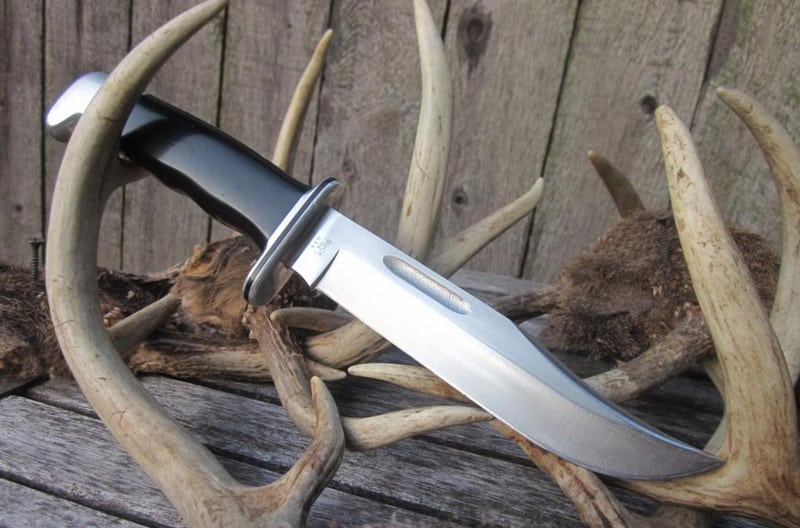
A good choice of knife
for field dressing.
Image 2

A diagram for where to
cut.
Image 3

A good choice of bucket
for disposal. These can also come with lids.

No comments:
Post a Comment